
"coffee yield by country"
5000 article(s) found

A brief introduction to the characteristics of Yunnan Tieka Coffee Flavor Manor
With the progress of science and technology, agricultural researchers have cultivated or introduced rust resistance.

Varieties of coffee beans
Several main coffee varieties and their characteristics are introduced here. Typica, also known as Tiberka Tibika, is the closest to the native species of Arabica, where almost all Arabica varieties originate. Widely cultivated in Central and South America in the past, the bean is long in shape and has excellent aroma and sour taste, but it is not resistant to leaf rust and requires quite a lot of shading trees to lead to production.

A brief introduction to the history and culture of the origin and development of Bolivian boutique coffee beans with dried almonds
Bolivia not only has a unique growing environment, but also has an excellent coffee variety Typica. In the past two hundred years, the main variety of coffee in Yanggas area is the ancient Tibica. Tibica coffee has a balanced and soft flavor, with lively aroma and rich sour taste. Unfortunately, the low production of Tibika and its poor disease resistance make Bolivia's

A brief introduction to the coffee producing areas of Colombia? What are the main varieties in Colombia?
For more information on coffee beans, please follow Coffee Workshop (Wechat official account cafe_style) Colombia, a country named after Columbus, the great navigator, and a football power that once had the Golden Lion King (our Chinese football sucks! ); a country that also produces literature (Garcia, author of one hundred years of Solitude, Nobel Prize for Literature. Horse

A brief introduction to the flavor, taste and aroma characteristics of high-grade vanilla sweet Bolivian coffee beans
The overall taste of Bolivian coffee is rich and balanced, the aroma is rich and unique, similar to the mixture of flower and fruit aroma, impressive. The perennial low temperature environment makes the coffee fruit grow slowly, compact enough, the aroma is also charming, the floral aroma is obviously medium and low acidity, but the feeling is not monotonous, on the contrary, it appears soft and fresh, with the sour taste of citrus fruit. Bolivian coffee

A brief introduction to the treatment method of grinding degree and baking degree of high-quality vanilla sweet Bolivian coffee beans
Bolivia not only has a unique growing environment, but also has an excellent coffee variety Typica. In the past two hundred years, the main variety of coffee in Yanggas area is the ancient Tibica. Tibica coffee has a balanced and soft flavor, with lively aroma and rich sour taste. Unfortunately, the low production of Tibika and its poor disease resistance make Bolivia's

A brief introduction to the cultivation of Bolivian boutique coffee beans with balanced taste, geographical location, climate and altitude
The early Bolivian coffee was of low quality and the market was very poor. Usually the picked coffee fruit is bumped all the way to the processing plant after a simple peeling treatment. Due to the imperfect infrastructure, the traffic is underdeveloped. Coffee farmers have to overcome the rugged mountain road and transport the beans to the higher altitude area of La Paz for washing. If the coffee fruit can not be delivered to the processing in time

A brief introduction to the treatment method of grinding degree and baking degree of Bolivian boutique coffee beans with balanced taste
Bolivia has made a lot of efforts to improve the quality of coffee, stimulate the enthusiasm of coffee farmers and make coffee farmers have a deeper understanding of fine coffee. After the introduction of the COE competition, in the first COE competition held in 2004, there were 13 boutique bean cups with a total score of more than 84 points, and the champion bean score was as high as 90.44 points.
Coffee planting History of Coffee introduction and expansion in China in the early stage (5)
1. From the first peak period of the development of China's coffee industry (1952-1961) to the late 1940s, according to recorded figures, there are 2173.33 hectares of rubber plantations in Hainan Island, with a total of 867600 rubber trees, with an annual output of 199,000 tons of dry rubber, and more than 300,000 coffee plants. the annual output of coffee beans is 1 ton. According to a survey in the early 1950s, there was a large amount of coffee left in Fushan area of Chengmai County, with a total of 70,000.
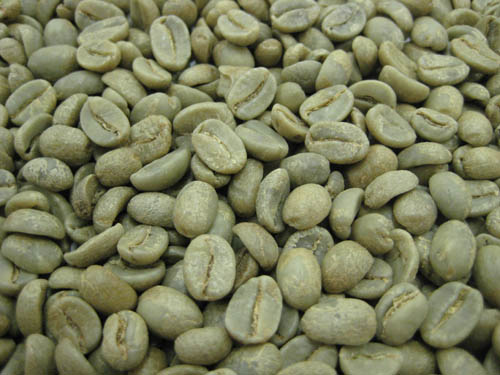
Peruvian coffee beans in America are characterized by high yield, high quality and balanced quality.
Peruvian coffee is of high quality and balanced and can be used for mixed drinks. Peru (Peru) is also a big coffee producer. Up to 98% of Peruvian coffee is grown in forest areas, and most producers are small farmers. Peru has good economic conditions and a stable political situation, thus ensuring the good quality of coffee. However, there are many local problems, except guerrilla warfare and drug trafficking.

A brief introduction to the history and culture of the origin and development of Bolivian boutique coffee beans with balanced taste
Bolivia has made a lot of efforts to improve the quality of coffee, stimulate the enthusiasm of coffee farmers and make coffee farmers have a deeper understanding of fine coffee. After the introduction of the COE competition, in the first COE competition held in 2004, there were 13 boutique bean cups with a total score of more than 84 points, and the champion bean score was as high as 90.44 points.

A brief introduction to the origin, development, history and culture of high-grade vanilla sweet Bolivian boutique coffee beans
In the past, most of the coffee in Bolivia was of mediocre quality, but in recent years, the production of boutique coffee has developed rapidly, and there have been a lot of pretty good beans. In recent years, the COE (Cup ofexcellence) system, which was first implemented in Brazil, has become more and more popular. Bolivia has also introduced this system, which can stimulate the enthusiasm of coffee farmers on the one hand and improve it on the other.
The History of Coffee introduction and expansion in China in the early stage (5)
1. From the first peak period of the development of China's coffee industry (1952-1961) to the late 1940s, according to recorded figures, there are 2173.33 hectares of rubber plantations in Hainan Island, with a total of 867600 rubber trees, with an annual output of 199,000 tons of dry rubber, and more than 300,000 coffee plants. the annual output of coffee beans is 1 ton. According to a survey in the early 1950s, there was a large amount of coffee left in Fushan area of Chengmai County, with a total of 70,000.

Catimor Katim Coffee catimor Katim Coffee good? Katim Coffee beans?
Professional coffee knowledge exchange more coffee bean information Please follow Coffee Workshop (Wechat official account cafe_style) Catimor was developed by scientists in Portugal in 1959 to find magic recipes for high yield, high disease resistance and small plants (that is, high-density cultivation). This variety is a hybrid of Timor (resistant to coffee leaf rust due to its Robusta genetic rhizome) and Katula.
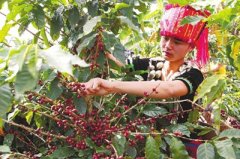
Yunnan coffee beans Yunnan coffee beans
Yunnan coffee in China Yunnan coffee large-scale cultivation was in the mid-1950s, once planted on a scale of 4000 hectares. By the end of 1997, the province's coffee planting area had reached 7800 hectares. At present, the province's planting area accounts for 70% of the country's area, and its output accounts for 83% of the country's total. Whether it is from the planting area or coffee bean output, Yunnan coffee has established its dominant position in China. Jane
Catimor Katim Coffee tastes good catimor Katim Coffee beans are good
Professional coffee knowledge exchange more coffee bean information Please follow Coffee Workshop (Wechat official account cafe_style) Catimor was developed by scientists in Portugal in 1959 to find magic recipes for high yield, high disease resistance and small plants (that is, high-density cultivation). This variety is a hybrid of Timor (resistant to coffee leaf rust due to its Robusta genetic rhizome) and Katula.

A brief introduction to the history and culture of the origin and development of Bolivian boutique coffee beans with rich sour taste
The early Bolivian coffee was of low quality and the market was very poor. Usually the picked coffee fruit is bumped all the way to the processing plant after a simple peeling treatment. Due to the imperfect infrastructure, the traffic is underdeveloped. Coffee farmers have to overcome the rugged mountain road and transport the beans to the higher altitude area of La Paz for washing. If the coffee fruit can not be delivered to the processing in time
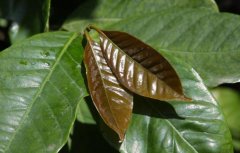
SCAA Old Coffee Variety Introduction
Coffee has more than 100 coffee varieties, the more common coffee are: Arabica, outstanding personality, unique flavor, is the main boutique coffee, mainly used for coffee shop operations and high-end coffee market supply;Robusta, rough flavor, high caffeine content, not a boutique coffee, often used for instant coffee processing and Italian coffee mixed beans.
High-quality coffee bean producing countries recommend Guatemala
The extra-hard coffee beans here are full-grained, delicious and balanced, and the pure Guatemala coffee once enjoyed a reputation as the best quality coffee in the world, but its quality also declined for a time. However, it is gratifying that its reputation is gradually being restored. In 1750, Father Jesuit introduced coffee trees to Guatemala and Germany at the end of the 19th century.

A brief introduction to the treatment method of grinding degree and baking degree of fragrant and mellow Vietnamese fine coffee beans
Vietnam Coffee Corporation (VINACAFE) is a 100% state-owned enterprise with 73 companies and farmers under its jurisdiction.